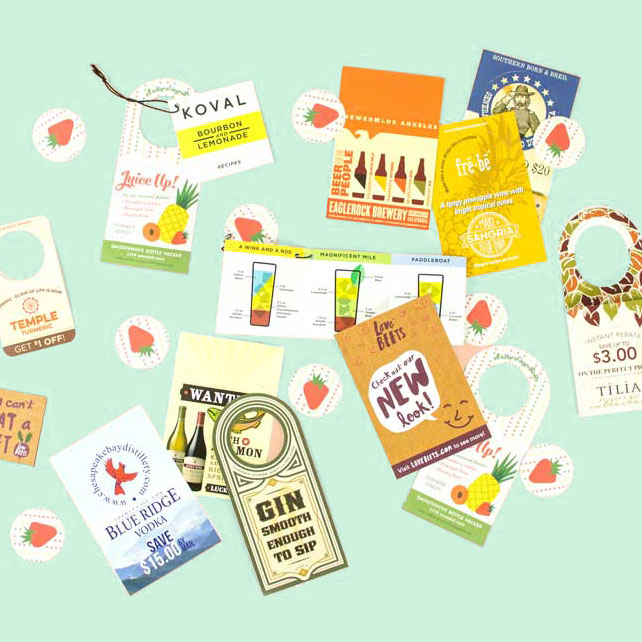
| Items | Qty | Price | |
|---|---|---|---|
| $0 |
$0
After checkout, we'll ask you to upload artwork or submit your design brief.
No items in your cart
Hide Cart
×
| Items | Qty | Price | |
|---|---|---|---|
| $0 |
The next step is figuring out how to get real value from the win.
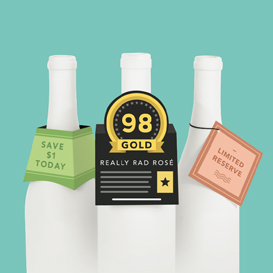
Competition medals and ratings can absolutely influence purchasing decisions, but usually not in the places brands focus on first. A social post announcing a Double Gold might generate engagement for a few days. A necker or shelf talker carrying that same message can keep working for months in the aisle where someone is deciding what to buy.
That’s where awards tend to matter most.
A lot of brands worry they missed the window if they didn’t immediately launch materials after results were announced. In reality, retailers and shoppers understand that competition wins take time to make their way into market.
A 2026 medal still feels current throughout 2027. That gives brands plenty of room to build award messaging into existing sales materials, shelf programs, distributor presentations, and seasonal retail pushes without feeling like you’ve missed your moment.
Where things start to lose effectiveness is when older awards become the only story being told. A medal from several years ago can still support credibility, but it works best alongside something more recent.
Brands that compete regularly often have another advantage: multiple wins across different products or competitions. When shoppers see several respected awards together, it creates a stronger impression of consistency and quality than a single isolated medal.
Social media, email, PR, and distributor announcements all help spread the news, but most purchase decisions still happen close to the point of sale.
POPAI’s Shopper Engagement Study found that many shoppers continue making decisions in-store, with some studies reporting rates as high as 76% in grocery and 82% in mass merchandise environments. That’s a major reason point-of-purchase materials remain effective for beverage brands, especially in crowded categories where products are competing side-by-side.
A medal callout gives shoppers a quick piece of third-party validation while they’re already evaluating options. In categories where many bottles look polished and premium, that extra layer of credibility can help simplify the decision.
That’s also why placement matters. A medal hidden on a website doesn’t have the same impact as one sitting directly in front of a shopper holding two competing bottles.
Competition wins also give distributors a timely reason to re-engage accounts.
Sales reps are already visiting retailers regularly, and award recognition gives them a fresh talking point that feels more substantial than a routine follow-up. Brands usually get more mileage from awards when they make it easy for distributor teams to bring that message into the market.
Updated sell sheets, retail-ready neckers, shelf talkers, and concise talking points all help keep the momentum going. Accounts are far more likely to activate a win when the materials are already prepared and easy to deploy.
The brands that tend to benefit most from awards are usually the ones that treat recognition as part of an ongoing retail strategy rather than a one-time announcement.
Awards do not land the same way across every category or price tier.
For value and mid-tier products, medals often serve as reassurance. Shoppers looking at unfamiliar products may see a recognized competition logo or rating as confirmation that the bottle is worth trying.
At premium price points, awards still matter, but usually in a more supporting role. Consumers spending $50, $75, or more often look at the full presentation together: packaging, brand story, shelf presence, retailer placement, and perceived craftsmanship. The medal strengthens the quality story rather than carrying it entirely on its own.
That makes execution especially important. Retail materials should feel aligned with the positioning of the product itself. High-end spirits paired with thin or poorly printed materials can create disconnect instead of reinforcement.
Not all awards carry the same weight, and shoppers have become increasingly familiar with the difference between a general claim and a specific one.
“Award-Winning” is easy to gloss over.
“Double Gold, San Francisco World Spirits Competition” gives shoppers something concrete to evaluate.
Including the competition name, medal level, and year helps establish credibility and gives the recognition more authority at shelf. Trophy wins, Best in Class awards, and Double Gold distinctions can all carry different levels of influence depending on the audience and category.
Clear, specific messaging tends to outperform vague recognition claims almost every time.
If you’re looking to get more value from a recent win, here’s the playbook:
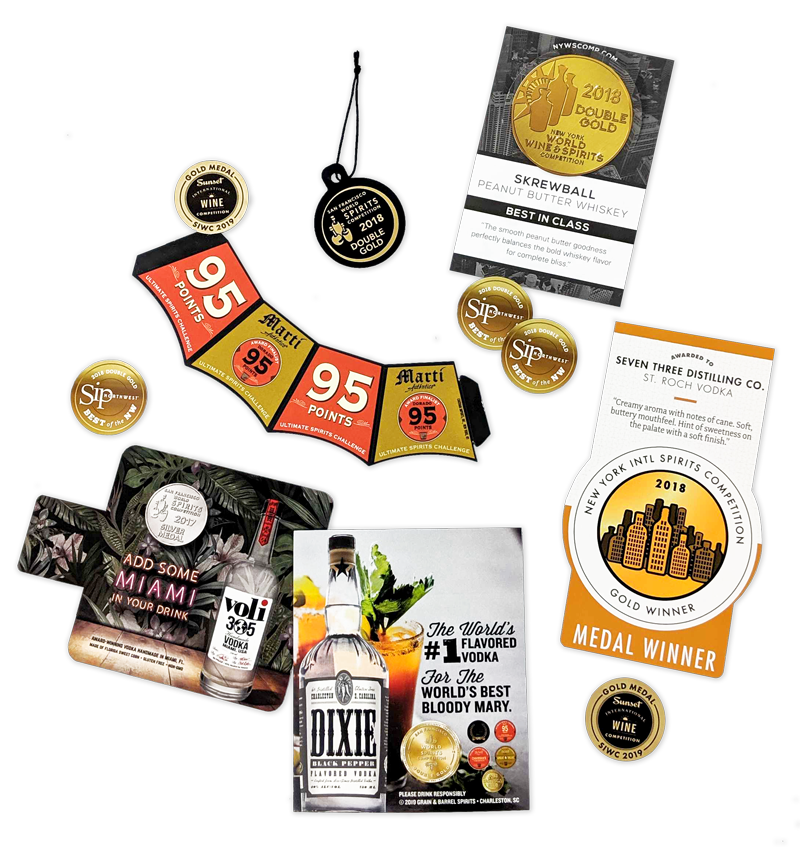
Since 2003, First in Print has helped wine and spirits brands bring awards and ratings into retail environments with bottle neckers, shelf talkers, case cards, and other point-of-purchase materials designed specifically for beverage brands.
Many of the industry’s leading competitions partner with us to give winners a fast, reliable way to turn recognition into retail visibility.
If you want to explore materials, finishes, and formats in person, request a free sample pack and see what award activation can look like at shelf.